ALBUQUERQUE, N.M. — For months, New Mexico’s two gubernatorial campaigns argued over dates, formats and invitations. Now, the debate over debates appears settled.
There likely won’t be one.
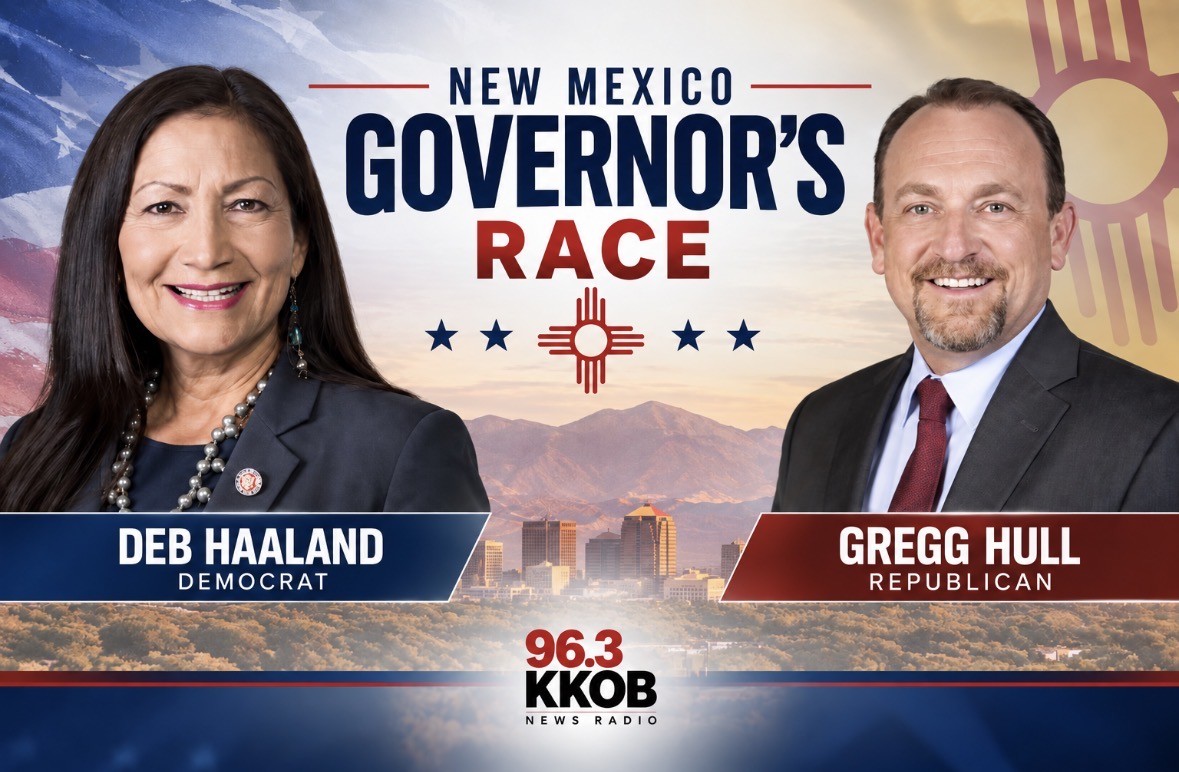
Democratic nominee Deb Haaland has announced that she will not participate in any gubernatorial debates before Election Day, ending weeks of public sparring with Republican nominee Gregg Hull over whether, when and where the candidates would meet on stage.
The decision leaves New Mexico voters on track to head into early voting without seeing the state’s two major-party candidates debate each other directly.
Haaland said she plans to spend the remainder of the campaign traveling the state and meeting voters face-to-face rather than participating in debate forums.
Her campaign maintains the dispute was never about avoiding a debate. Campaign officials say they informed organizers that an Oct. 8 debate proposed by KOB-TV was not workable and offered three alternative dates in October. According to the campaign, Hull’s schedule did not allow him to participate on those dates.
Hull rejects that argument.
The former Rio Rancho mayor said he adjusted his schedule to accommodate the Oct. 8 debate and remains willing to participate in a televised forum before the election. Following Haaland’s announcement, Hull said the Democratic nominee was walking away from opportunities to answer questions alongside her opponent.
A Campaign Issue of Its Own
What began as a scheduling disagreement gradually evolved into a campaign issue.
Republicans spent much of the summer accusing Haaland of avoiding debates and candidate forums. Haaland’s campaign countered that it had proposed alternative dates and had continued engaging voters through campaign events, interviews and public appearances.
However, the argument may have not been about scheduling at all.
It was over whether a debate would happen at all.
Media Organizations Make a Public Appeal
The impasse prompted an unusual intervention from some of New Mexico’s largest news organizations.
Leaders from News Radio KKOB, Albuquerque Journal, and KOAT-TV, working as Partners for Impact, issued a public letter urging both campaigns to resume negotiations and agree to a debate before early voting begins.
The proposed event would have been a 30-minute statewide broadcast carried simultaneously on television, radio and digital platforms.
The organizations emphasized that the request was about voter access rather than politics.
“Most important, New Mexico voters deserve the opportunity to hear the two candidates for governor discuss the issues side by side,” the letter stated.
Haaland’s decision effectively ends those efforts unless her campaign changes course.
The Political Reality
While debates are deeply rooted in modern campaign tradition, they are not required.
Political strategists have long viewed debates through a simple lens: candidates trailing in a race often seek them, while candidates with advantages frequently see more risk than reward.
Recent political history provides examples of candidates winning major statewide races without participating in traditional debates. Arizona Governor Katie Hobbs declined to debate Republican Kari Lake in 2022 and still prevailed on Election Day.
Campaign veterans generally point to factors such as party registration, fundraising, turnout operations, candidate quality, and broader political conditions as more influential than any single debate performance.
The stakes of a debate can be significant. Biden’s troubled performance against Trump in June 2024 fueled doubts about his candidacy and was followed weeks later by his exit from the race, with Harris taking over as the Democratic nominee.
Still, many voters continue to view debates as one of the few opportunities to compare candidates under identical conditions and hear direct exchanges on issues facing the state.
What Happens Next
Unless either campaign reverses course, New Mexico’s 2026 gubernatorial race will be decided without the kind of televised debate that has long been a staple of statewide elections.
That does not mean voters won’t hear from the candidates.
Both campaigns are expected to continue holding events, conducting interviews and running extensive advertising campaigns as early voting approaches.
But barring a last-minute breakthrough, New Mexicans will make their decision without seeing Deb Haaland and Gregg Hull share a debate stage.