SANTA FE, N.M. — Recent rainfall has reduced fire activity on the Frijoles Fire in northern New Mexico, but firefighters are now facing a new set of challenges as wet conditions limit access to parts of the burn area.
Fire managers reported Friday that the wildfire has grown to 15,956 acres and is now 74% contained. The fire is currently being managed by 38 personnel. Heavy rainfall and higher humidity have helped suppress fire activity, but saturated roads and muddy terrain have made it difficult for crews to safely reach some areas of the fire.
Officials say firefighting operations have been temporarily scaled back because of concerns that vehicles could become stuck or slide off roadways. Steep terrain, combined with slippery conditions, has also increased the risk of falls and flash flooding for personnel working in the area.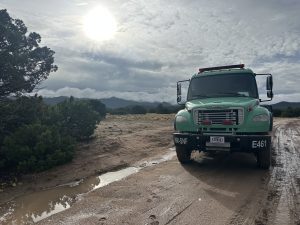
While the rain has been beneficial for fire suppression efforts, it has also increased concerns about flooding in and around the burn scar. According to fire officials, saturated soils and additional monsoon moisture could lead to flash floods and debris flows, with ash, sediment and burned vegetation potentially moving downstream beyond Forest Service lands.
A recently completed Burned Area Emergency Response (BAER) assessment found that approximately 80% of the fire area experienced low or very low soil burn severity, while 15% was classified as moderate and 5% as high severity. Officials say those findings suggest much of the landscape will recover naturally, but areas that burned more intensely remain vulnerable to erosion and flooding.
Fire managers are planning an infrared flight when weather conditions improve. The flight will help identify remaining hot spots and provide more accurate information about the fire’s size and containment.
Community members will have an opportunity to learn more about recovery efforts during a Frijoles Fire Recovery Open House scheduled for September 24 from 5:30 p.m. to 7:30 p.m. at Chimayó Elementary School. Representatives from several agencies will be available to answer questions about watershed impacts, recovery plans, available resources, and the findings from the BAER assessment.
Officials continue to urge residents and visitors to avoid arroyos, stream beds, and other low-lying areas during periods of heavy rain and to move to higher ground if water begins to rise.