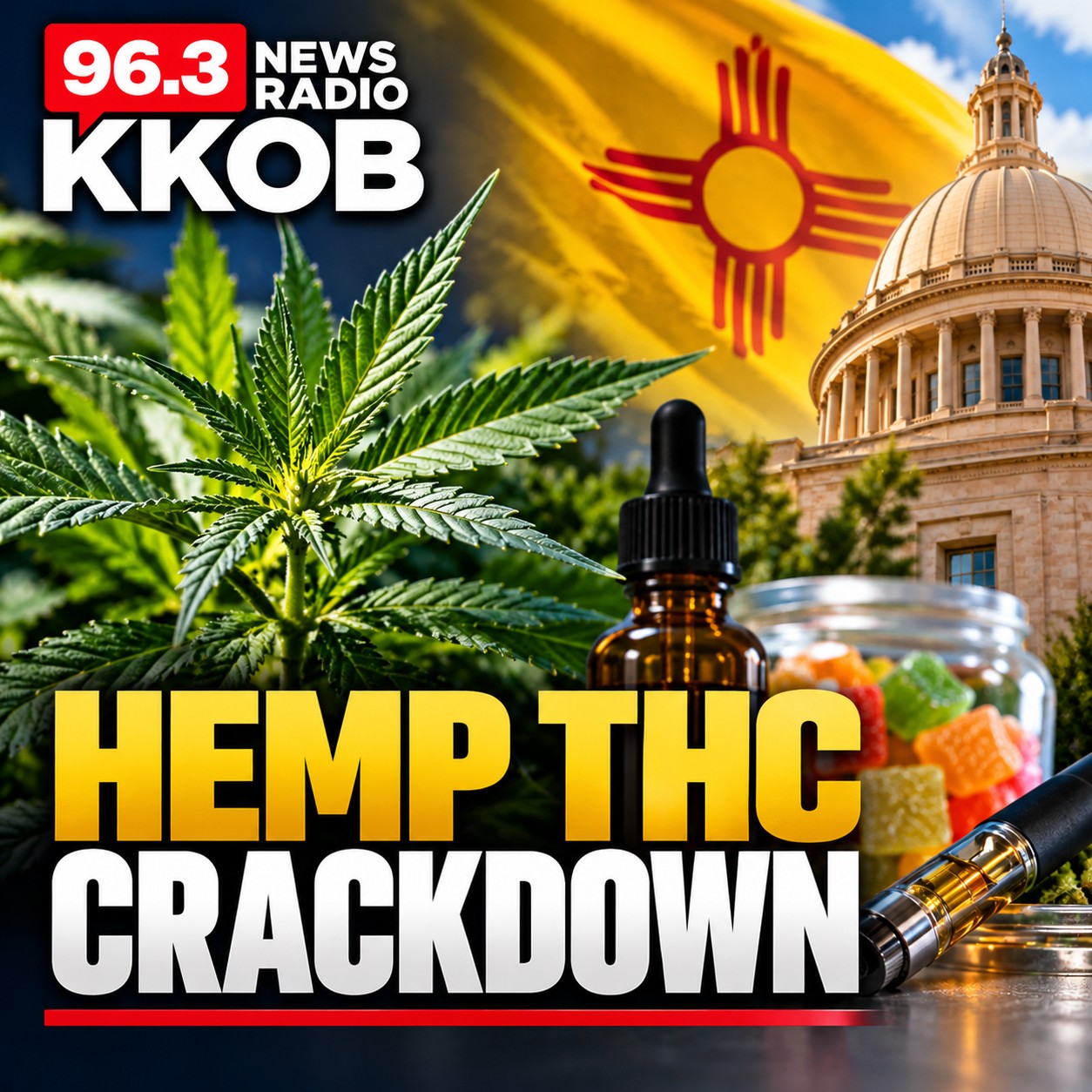
ALBUQUERQUE, N.M. — What began as a congressional effort to help American farmers has grown into one of the fastest-expanding sectors of the cannabis industry. Now, that industry is facing what could be its biggest test yet.
A federal crackdown on hemp-derived THC products is looming, threatening a market that has exploded in recent years with products ranging from cannabis-infused seltzers and gummies to vape cartridges and smokable hemp flower.
At the center of the debate is a loophole created in the 2018 Farm Bill, which legalized industrial hemp but defined it based on a narrow THC threshold. Businesses across the country used that definition to manufacture and sell products capable of producing a marijuana-like high while remaining technically legal under federal law.
Now, Congress has approved legislation that would dramatically restrict the amount of THC allowed in hemp products. The change was originally scheduled to take effect in November but has been pushed back until December 11, giving lawmakers additional time to consider whether regulation, rather than prohibition, might be a better path forward.
While New Mexico has a legal recreational cannabis market, hemp-derived THC products have carved out their own niche.
They can be found in smoke shops, wellness stores, convenience stores, and specialty retailers throughout the state. For some businesses, hemp-derived drinks and edibles have become a growing source of revenue, attracting consumers looking for alternatives to traditional alcohol or cannabis products.
If the federal restrictions move forward as written, many of those products could disappear from shelves.
Industry analysts estimate the impact could be substantial, warning of billions of dollars in lost sales and the elimination of thousands of jobs nationwide. Supporters of the industry argue the proposal would effectively shut down large portions of the hemp marketplace rather than regulate it.
Supporters of the restrictions argue the hemp industry has operated in a legal gray area for years.
They point out that intoxicating hemp products are often sold outside the strict testing, labeling, and licensing requirements imposed on state-regulated cannabis businesses. Critics also say some products have been marketed in ways that appeal to younger consumers and have been available in locations where marijuana products cannot legally be sold.
Industry leaders counter that regulation, age restrictions, and product testing would address those concerns without dismantling an entire sector of the economy.
For business owners who invested heavily in hemp-derived THC products, the uncertainty has become the biggest challenge.
Some companies have already paused expansion plans, while others are exploring alternative products in case the restrictions ultimately take effect.
Congress still has time to revisit the proposal before the December deadline.
If lawmakers do not act, the new THC limits could significantly alter the hemp industry nationwide, affecting manufacturers, retailers, and consumers from North Carolina to New Mexico.
For now, business owners, cannabis advocates, and regulators are all watching Washington closely, knowing the next few weeks could determine the future of an industry that barely existed a decade ago.