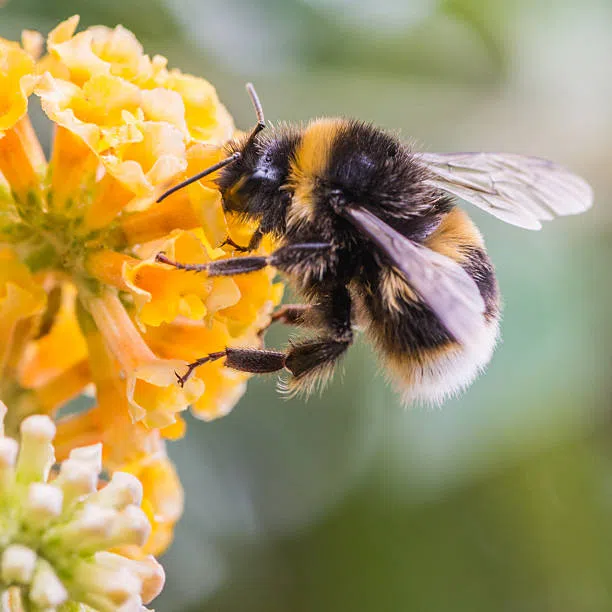
ALBUQUERQUE, NEW MEXICO – A new federal proposal is putting bumble bees and infrastructure in the same spotlight — and New Mexico could feel the impact. The U.S. Fish and Wildlife Service is rolling out a first-of-its-kind national conservation agreement designed to protect declining bumble bee species while keeping major energy and transportation projects on track across the lower 48 states.
The idea is simple but sweeping: create a single, unified framework that both safeguards pollinator habitat and gives energy developers, utilities, and transportation agencies clearer expectations as they plan long-term projects. For New Mexico — where power lines cut across high desert, highways stretch for miles, and energy corridors fuel much of the region — the proposal could influence how future development moves forward.
Under the agreement, companies and agencies operating in the state could voluntarily enroll in a conservation program that offers regulatory certainty if any of the 11 covered bumble bee species are listed under the Endangered Species Act down the road. In exchange, they’d commit to land‑management steps that support pollinator habitat — everything from vegetation practices to preserving natural corridors already humming with bee activity.
Federal officials say the approach aims to eliminate the guesswork that often accompanies large infrastructure projects. Instead of navigating separate rules in different states, participants would follow one national playbook. For New Mexico, that could translate into fewer delays for energy and transportation work, all while maintaining habitat for species such as the American and western bumble bees found in parts of the Southwest.
The proposal is the result of a multi‑state collaboration led by the University of Illinois Chicago and the Wisconsin Department of Natural Resources, alongside federal wildlife experts and industry partners. Their goal: conserve millions of acres of pollinator habitat without slowing the modernization of the nation’s infrastructure.
The public will get its first official look when the proposal is published in the Federal Register on January 23, 2026. A 30‑day comment period will follow, giving New Mexicans — from environmental groups to industry stakeholders — the chance to weigh in. Comments can be submitted through February 23 by searching docket FWS–R3–ES–2025–0245 at regulations.gov.