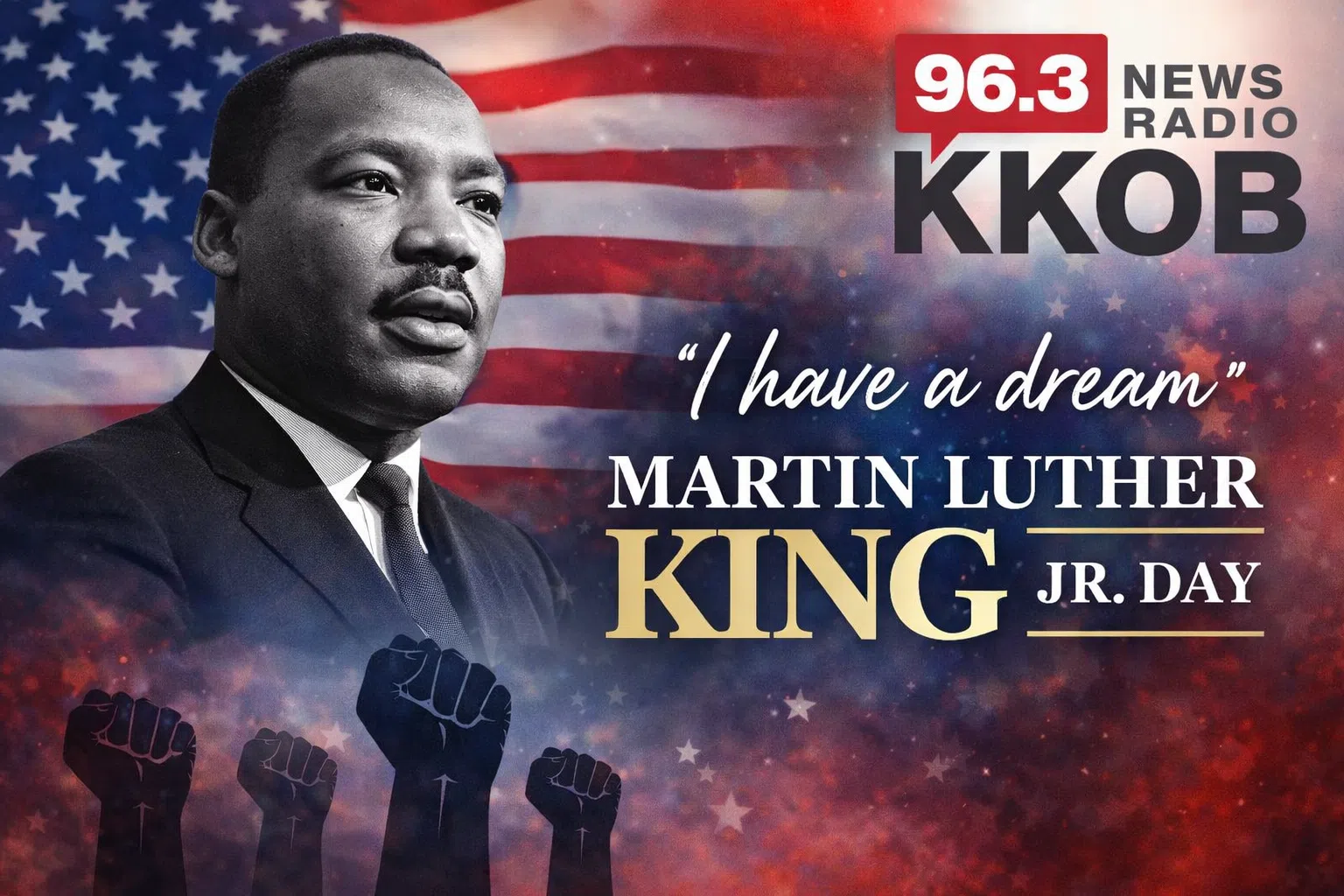
ALBUQUERQUE, NEW MEXICO – Martin Luther King Jr.’s influence reaches well beyond the places he marched. In New Mexico—a state where Black, Hispanic, Native, and immigrant communities share deep, intertwined histories—his message of justice and nonviolence continues to fuel marches, teach‑ins, and service projects rooted in the values he championed. Each January, communities across the state gather not only to honor Dr. King’s legacy but to advance the work he began.
In Albuquerque this year, crowds marched from the University of New Mexico campus to the Convention Center, reflecting King’s vision of unity across racial and cultural lines. Similar events unfolded in Santa Fe, Las Cruces, Clovis, Gallup, and cities statewide, where residents highlighted how King’s teachings resonate in a multicultural state shaped by both Black and Hispanic civil‑rights movements.
King’s words remain central to these gatherings. “Injustice anywhere is a threat to justice everywhere,” he wrote from a Birmingham jail—an idea that has long informed New Mexico’s efforts toward equity within both Black and Hispanic communities. That principle is visible in everything from statehouse keynotes to neighborhood service projects, where speakers emphasize a shared responsibility to confront inequality.
New Mexico’s fight for equal rights has always included powerful Hispanic civil‑rights voices whose work often paralleled—and intersected with—King’s national movement.
Dolores Huerta, born in Dawson, New Mexico, became one of the most influential labor leaders of the 20th century. Alongside César Chávez, she co‑founded the United Farm Workers and fought for the economic and human rights of Latino farmworkers. Huerta helped lead the five‑year Delano grape strike and the nationwide boycotts that pushed growers to provide better pay and working conditions. Her activism broke barriers for women, immigrants, and workers across the Southwest.
At the same time, Reies López Tijerina was leading a parallel fight in northern New Mexico. Known as “King Tiger,” Tijerina organized Chicano communities to demand the restoration of land grants taken after the Treaty of Guadalupe Hidalgo, advocating for cultural preservation, Spanish‑language rights, and economic self‑determination. His activism made New Mexico a focal point of the national Chicano Movement.
Together, Black and Hispanic leaders shaped key civil‑rights conversations in New Mexico—building movements focused on land rights, labor rights, language rights, and equal opportunity. Their work illustrates what King meant when he wrote that “whatever affects one directly, affects all indirectly.”
The state has also institutionalized King’s legacy. The New Mexico Martin Luther King Jr. State Commission promotes cultural awareness and human rights based on his six principles of nonviolent action, coordinating year‑round programs that bring these values into public life. This mission reflects King’s belief that progress requires ongoing commitment—what he called bending “the arc of the moral universe” toward justice.
New Mexico’s MLK Day events often highlight King’s most enduring themes: courage without bitterness, love as a counter to hate, and service as a measure of leadership. The inscription at the MLK Memorial captures this spirit: *“Darkness cannot drive out darkness; only light can do that. Hate gatherings in the moral language that powered the movement.
This year’s calendar followed familiar traditions: breakfasts and keynotes in Albuquerque, a noon program at the Roundhouse in Santa Fe, luncheons and marches in Rio Rancho, Roswell, and Farmington, and community celebrations from Silver City to Gallup. The through‑line is King’s insistence on collective action. *an appeal New Mexicans continue to answer each January and throughout the year.
If King’s voice still feels urgent across New Mexico, it’s because the state continues putting his principles to work—through marches that emphasize unity, classrooms that teach nonviolence, service projects that meet community needs, and a multicultural coalition still striving to fulfill the promise of equal justice. The forms of activism may evolve, but the foundation remains the same. As King reminded the nation in 1963, “We must use time creatively, in the knowledge that the time is always ripe to do right.”