SANTA FE – State officials today unveiled three conceptual plans for redeveloping the Albuquerque Fairgrounds and surrounding International District, a project that could reshape one of the city’s most historic sites. The proposals, developed by global design firm Stantec, include mixed-use housing, entertainment venues, green spaces, and infrastructure upgrades.
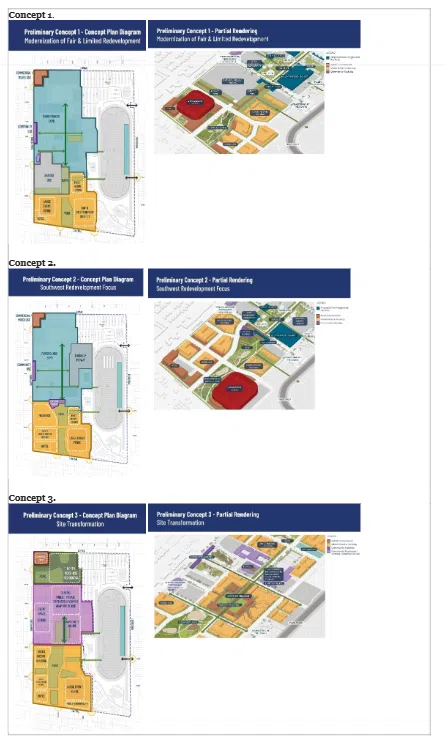
The concepts range from modest improvements to a full site transformation:
- Concept 1 upgrades existing facilities while adding a multipurpose event venue, retail space, and a 10-acre park.
- Concept 2 relocates the State Fair Midway to make room for an arena complex, mixed-use district, and a nine-acre park.
- Concept 3 envisions the most sweeping changes, including hundreds of homes, an innovation hub, and more than 20 acres of green space.
Officials say the plans aim to spark public discussion before a final master plan is adopted. Feedback can be submitted online at fairgroundsdistrict.nm.gov, and a community meeting is scheduled for early January.
While state leaders describe the project as a “once-in-a-generation opportunity,” the proposals have drawn skepticism and pushback from residents and community advocates.
- Fear of Losing the State Fair: Many residents oppose any move to relocate the New Mexico State Fair, which has been held at the site for more than 80 years. At recent meetings, attendees jeered at suggestions that the fair could move, calling it a blow to tradition and local culture.
- Gentrification and Equity: Advocates worry redevelopment could price out working-class families in the International District. Some question whether promised benefits—like parks and jobs—will reach existing residents or primarily attract outside investment.
- Transparency and Trust: Meetings have been tense, with disruptions over whether decisions have already been made. Critics argue that hiring an out-of-state firm like Stantec raises concerns about local input and cultural sensitivity.
- Economic Uncertainty: While projections suggest billions in potential economic activity, opponents note that gains may be temporary and depend on what gets built and who controls funding.
Neighborhood leaders have called for guarantees on affordable housing, cultural preservation, and meaningful community involvement. Others, including organizers of major events like the Gathering of Nations Powwow, stress the fairgrounds’ role as a cultural hub that “brings the world to your neighborhood.”
Next Steps: The Fairgrounds District Board will continue refining plans through early 2026, with development expected to begin in 2027. Officials say scenarios will include options for keeping the State Fair on-site or relocating it, but no final decision has been made.
For more details and to submit feedback, visit fairgroundsdistrict.nm.gov.